Renewables & EV Charging4 min read717 words
Sunrun, SPAN Pair Rooftop Batteries With Home AI Compute Nodes
Sunrun counts 164,000 enrolled households, making it the biggest distributed power plant in the US. It will now install SPAN's XFRA compute nodes, pairing home batteries with AI data center hardware.
Clearance
- Sunrun enrolled 164,000 households as of this month, ranking as the biggest distributed power plant in the US.
- SPAN launched XFRA compute nodes earlier this year; Sunrun became an authorized installation partner in September.
- Sunrun and SPAN first partnered on installations in 2021.
- Powell and Rao announced the pairing at events in September 2025 and at DERVOS on November 5.
- The DER Task Force, organizer of DERVOS, formally launched in 2019.
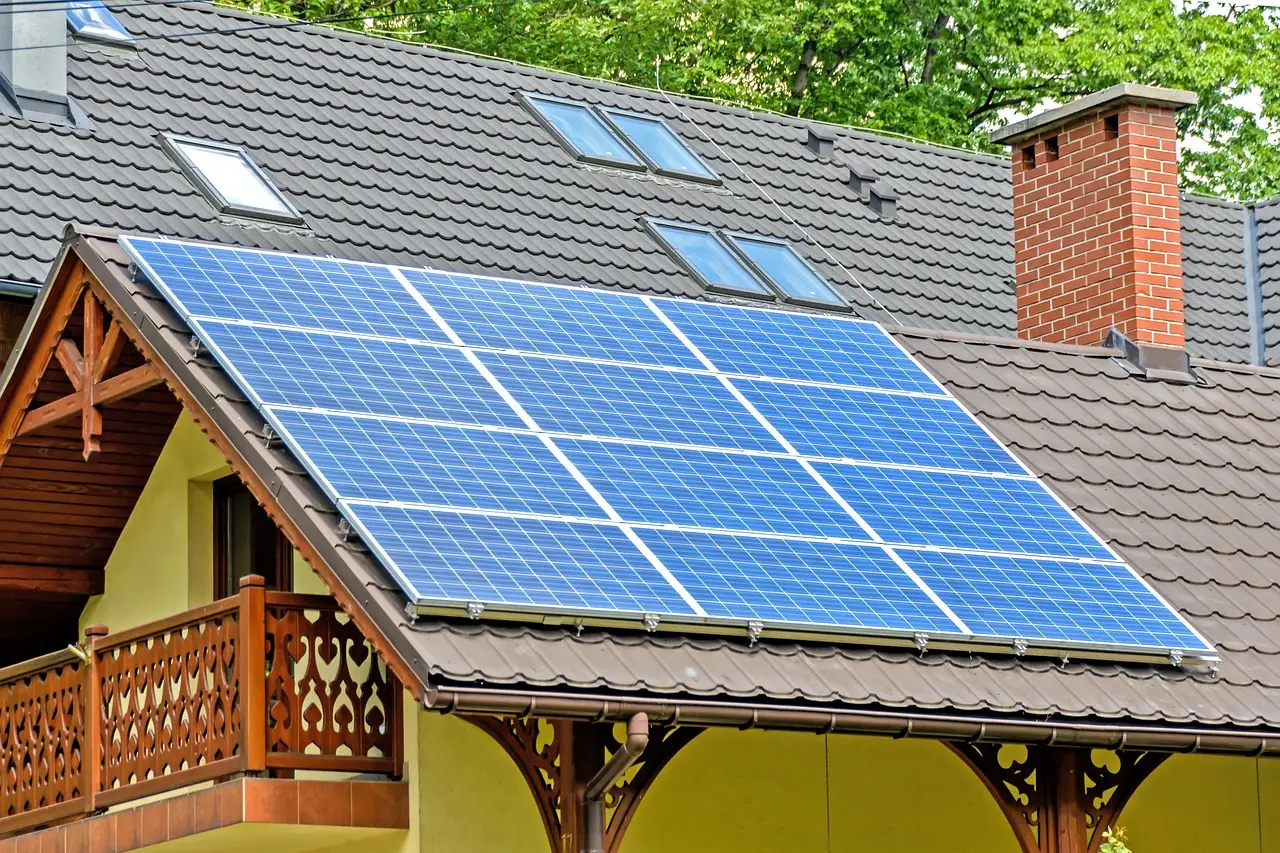
Sunrun now ranks as the largest distributed power plant in the United States, with solar and storage assets enrolled across 164,000 households as of this month. The company is also an authorized installation partner for SPAN's XFRA compute nodes, a pairing aimed at gigawatt-scale distributed computing networks starting in Texas and other selected markets.
For contractors, the significance is straightforward. Distributed energy resources — DERs, the umbrella term for any non-centralized generation or storage asset — keep adding hardware to residential and light commercial work. Rooftop solar, EV chargers and home batteries were the first wave. Compute nodes staged in homes are the next one.
What is XFRA, exactly?
SPAN introduced XFRA earlier this year. The product consists of computer nodes staged at homes and smaller commercial spaces, assembled into a distributed data center. The model resembles the familiar citizen-scientist platforms that borrow idle personal computers over the internet, except SPAN deploys its own hardware rather than using a participant's machine.
Sunrun and SPAN are not strangers. The two signed an installation partnership back in 2021, covering SPAN's next-generation home electrical panels among other products. That groundwork led to the distributed computing deal announced this past September, with a focus on new home developments.
Sunrun explains the engineering logic plainly: its battery-plus-solar systems will keep reliable electricity flowing to both the homes and the XFRA compute nodes, while preventing overloads on local distribution infrastructure. That headroom, in turn, lets SPAN maximize node deployment per circuit.
CEO Mary Powell framed the economics in a press statement. "By pairing home energy generation and storage with XFRA compute nodes, we are unlocking new economic value for our customers and for Sunrun, while also solving certain speed-to-power constraints that would otherwise limit AI deployment," she said. Speed-to-power, the lag between demand for computing and the electricity to run it, has become the binding constraint on data center construction.
SPAN founder and CEO Arch Rao put a number-free but clear verdict on it. "We can now drastically increase our penetration of XFRA compute nodes by pairing them with Sunrun energy systems to deliver cost-effective AI compute capacity at unprecedented speed while also reducing compute cost for certain AI applications," Rao said.
How did we get here?
The Department of Energy began promoting decentralized home- and community-based resources in the early 2000s, as the falling cost of solar, wind and storage made small-scale generation competitive. The agency coined "prosumer" — a ratepayer who produces power rather than only consuming it — to describe the arrangement.
Sunrun launched in 2007, segued into storage, and now presents itself as a storage-first company. Powell prefers "distributed" over "virtual" when describing these systems, on the argument that hardware is the foundational element. Virtual power plants use smart-grid software to coordinate thousands of far-flung producing and consuming devices, balancing supply and demand at peak periods.
The DER field has widened well beyond rooftop solar. It now embraces practically any non-centralized resource regardless of size or type — including, for instance, a new gas plant commissioned to serve an adjacent AI data center.
Why the industry is watching
Powell reiterated the distributed computing push at the 2026 DERVOS summit at the Brooklyn Navy Yard on November 5, after raising it during Climate Week in New York City in September. DERVOS, a play on Davos, is organized by the DER Task Force, a trade group that formally launched in 2019. It claims lineage from a 1970s New York activist outfit, the Energy Task Force, whose credentials included an illegal wind turbine installation in the city.
The Task Force's slogan is "Everything is DER." As the group puts it: not that everything is small or literally distributed, but that the center of gravity is shifting toward energy resources closer to load and controlled by those who need the power. Sometimes the shift is bottoms-up, sometimes centrally planned.
Their verdict is blunt: "DERs aren't the sideshow anymore. They're the main event."
The resiliency argument behind all of this predates the computing angle. Centralized plants can trip widespread brownouts or blackouts under stress, and they concentrate attractive targets for attack. Distributed assets, by contrast, spread the risk — and, increasingly, the panel work.
via cleantechnica.substack.com (Original)
More from Tom Whitfield
Show full bio
News editor covering technology and product news in Wiring News is the daily trade press for at Wiring News.
7 articles
Alternates · Related articles
SOLRITE and sonnen Add ADAPT Smart Breakers to Residential VPP
U.S. storage tops 200 GWh as 2030 deployment forecast rises to 708 GWh
U.S. energy storage passes 200 GWh; nine-month installs hit 48.3 GWh
Moment Energy's Nova Puts Retired EV Packs to Work in 500 kWh Storage
LS ELECTRIC Lands $93.83M Switchgear Order for US AI Data Center