Renewables & EV Charging4 min read737 words
22.5 MW Floating Solar Rises on a New York Gravel Pit, Built for 69 lb/ft2 of Snow
Third Pillar Power is building a 22.5 MW floating solar complex on a flooded New York gravel pit, rated for 69 lb/ft2 of snow, with transformers and switchgear mounted on custom barges.
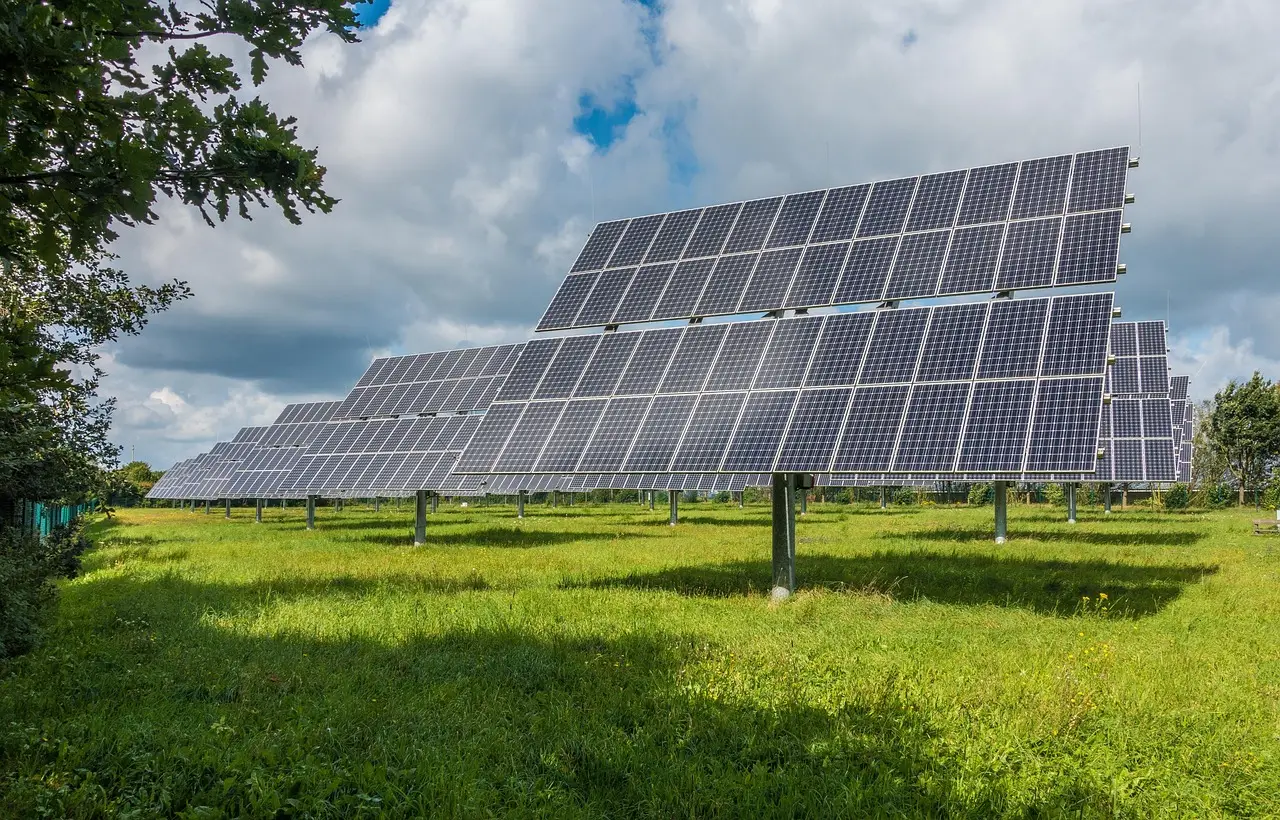
Clearance
- Crown City Solar totals 22.5 MW DC in three 7.5 MW phases on a 120-acre flooded gravel pit in Cortlandville, New York.
- The design uses a ground snow load of 69 pounds per square foot, the highest of any US floating solar project per the developer.
- Phase 1 mechanical completion is expected in December; commercial operation is due February 2027; phases 2 and 3 in October 2027.
- Medium-voltage transformers and switchgear ride purpose-built barges, claimed as a US floating solar first.
- About 1,500 subscribers are expected, with an estimated 19,800 short tons of CO2 cut annually.
Third Pillar Power announced on November 17 that construction is underway on a 22.5-megawatt floating solar complex on a 120-acre flooded gravel pit in Cortlandville, New York. The company says the design carries a ground snow load of 69 pounds per square foot, the highest figure of any floating solar project in the United States. The company also claims it is the largest floating solar site in North America. Those claims come from the developer, not from independent verification.
Why build solar on a flooded gravel pit?
The water sits on part of the Polkville Crushed Stone Facility, a sand and gravel mine still in operation and owned by Suit-Kote Corporation, which Colas Inc. purchased in October. The site also holds an asphalt plant and a storage terminal. Roughly 120 acres of the mine pit are flooded. Third Pillar pitches the project as a way to keep solar off farmland and open space. A working mine is a hard site to argue against.
A quarry is not new ground for this technology. A cement plant in Belgium floats 31 megawatts of panels on its own flooded chalk quarry, though that power feeds the plant directly rather than the grid. Floating panels also run cooler than ground-mounted ones. Idaho National Laboratory, working with NREL on floating solar, attributes the performance edge to that cooling effect.
How heavy is 69 pounds per square foot?
Ground snow load is the starting number engineers use: the weight of snow expected on flat, open ground at that location in a bad winter. Structural loads for the array are derived from it. A standard 4-by-8 plywood sheet at 69 pounds per square foot would carry 2,208 pounds of snow. On land, posts driven into the ground carry that weight. On water, floats carry it, and they must hold the panels above the surface without tipping. Third Pillar did not publish the margin built into the float design.
CEO Jaimeet Gulati expressed confidence in the climate case. "The question is no longer whether floating solar works here," he said in the announcement. A Swiss Alpine array rests on a gravel pad on the lakebed for about half the year while its reservoir drains, so cold-climate floating solar has precedent.
Why are the transformers on barges?
Every solar farm needs transformers (units that step voltage up for efficient transmission) and switchgear (a cabinet of breakers and switches that isolates parts of the system for faults or maintenance). Normally that equipment sits on a concrete pad on dry land. At Crown City, Third Pillar is mounting the medium-voltage transformers and switchgear on purpose-built barges, which the company says has not been done on a US floating solar project before.
The company gives three reasons:
- Less farmland consumed.
- Fewer floodplain siting problems, since a barge rises with the water while a pad stays put.
- Better electrical efficiency, a claim the release does not quantify.
What are the phases and the timeline?
The build runs in three phases of 7.5 megawatts each, all rated in DC (direct current, the panels' output before inverters convert it to AC for the grid). Third Pillar published only DC ratings, so the AC capacity is unknown. D3Energy is the contractor.
- Phase 1, Crown City Solar 1: mechanical completion expected in December, meaning hardware installed and wired but not yet selling power. Commercial operation is due in February 2027.
- Phases 2 and 3: scheduled for October 2027.
Third Pillar went from site control and interconnection application to construction in under two years, a fast pace by interconnection-queue standards. The takeaway: the first 7.5 megawatts should start earning credits in February 2027 if the schedule holds.
What is community solar?
Community solar lets subscribers buy into a project without rooftop panels. The project feeds the grid, and subscribers receive credits on their monthly electric bills for their share of production. Third Pillar expects roughly 1,500 subscribers through New York's program and estimates an emissions cut of about 19,800 short tons of carbon dioxide per year. NYSERDA, the state agency behind NY-Sun, says community solar subscribers typically save 5 to 10 percent annually on their electricity.
The release does not state a subscription price, a construction cost, or the utility whose customers can enroll. Take the savings range as the state's number, not the project's.
via Google News · Switchgear & Industrial Power (Source)
More from Priya Raman
Show full bio
Senior reporter covering people, launches and day-to-day practice in Wiring News is the daily trade press for at Wiring News.
10 articles
Alternates · Related articles
Crown City Solar reaches construction with 22.5 MW floating array
U.S. storage tops 200 GWh as 2030 deployment forecast rises to 708 GWh
Enel Buys 317 MWdc South Carolina Solar Portfolio From energyRe
US Battery Storage Passes 200 GWh as Texas Leads 2026 Buildout
Exus Locks In $345 Million to Build Out 6 GW U.S. Renewables Pipeline