Industrial Electrical4 min read735 words
GE Vernova's HYpact-145g Dumps SF6 With g3 Gas Mix
GE Vernova's 145kV, 40kA HYpact-145g replaces SF6 with the g3 gas mix, cuts AIS footprint by 50% and targets roughly 75% lower lifecycle carbon. Production is set for Kassel, Germany.
Clearance
- HYpact-145g is rated 145kV, 40kA and replaces SF6 with a CO2, oxygen and fluoronitrile (C4F7N) g3 mix
- Footprint reduction is at least 50% versus a standard air-insulated substation
- Equivalent g3 equipment shows about a 75% lifecycle carbon reduction; 145kV g3 GIS demonstrated 70%
- The unit will be manufactured at GE Vernova's Kassel plant in Germany
- The g3 mix is fully recoverable at end of life using existing gas-handling infrastructure
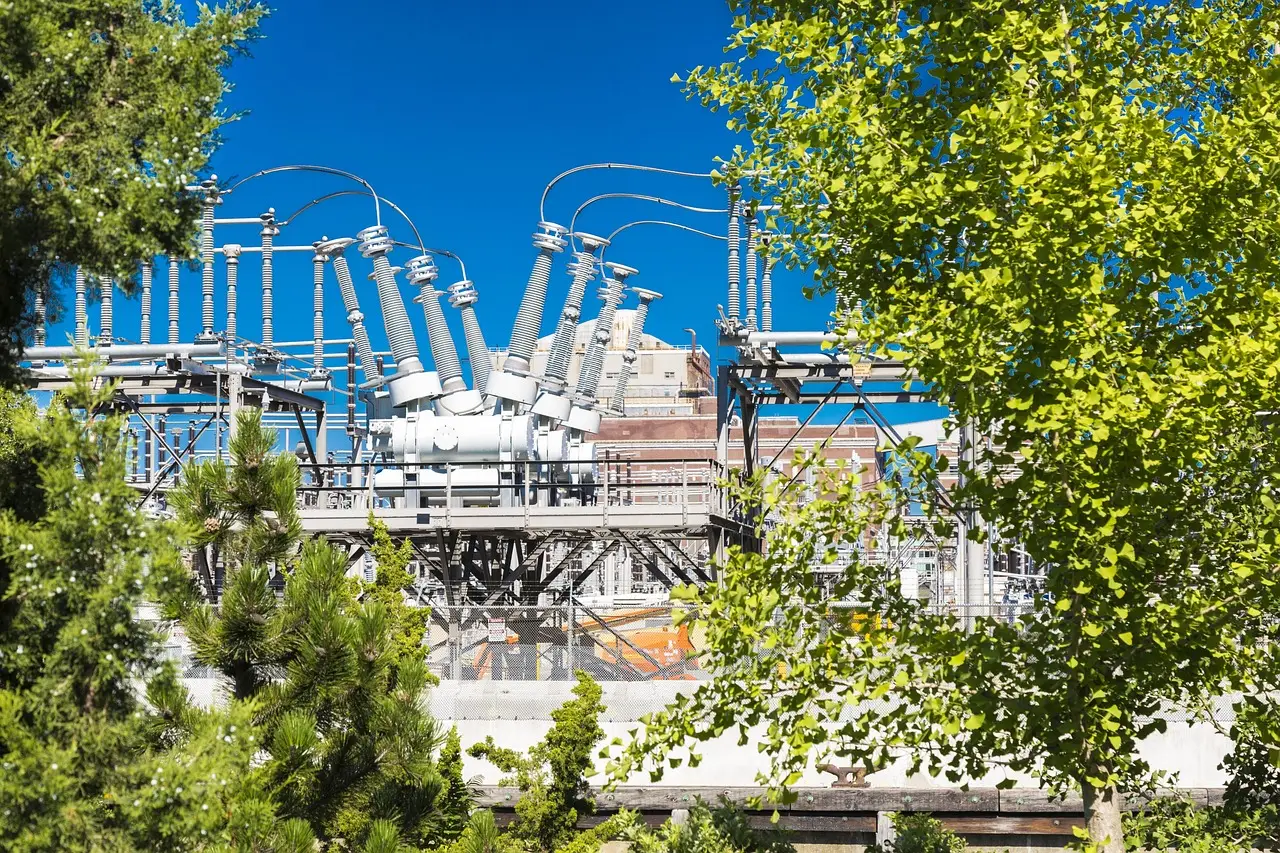
GE Vernova has launched the 145kV, 40kA HYpact-145g, a hybrid switchgear unit that replaces SF6 with the g3 gas mix and cuts substation footprint by at least 50% against conventional air-insulated switchgear. The unit combines gas-insulated and air-insulated components in a single package. The g3 mixture consists of carbon dioxide and oxygen with a small amount of fluoronitrile (C4F7N).
What does the new unit change for operators?
Transmission operators face rising electrification and ageing grids. Many urban and industrial corridors lack the land for bulkier air-insulated substations (AIS, the conventional technology using air as the insulating medium). GE Vernova positions the hybrid architecture as the answer.
Luc Doms, Strategy & Product Management Leader for GE Vernova's Electrification segment, said: "Operators want to move away from SF6 without sacrificing the performance, reliability, compactness and indeed the optimal carbon footprint that their substations need." He added that the HYpact-145g "gives operators even more choice and flexibility as they go about their upgrade." Removing SF6 addresses a major decarbonisation hurdle across Scopes 1 and 3 (direct and value-chain emissions). The takeaway: the unit targets operators who need fault-interruption performance without new land.
What are the lifecycle carbon numbers?
GE Vernova states that replacing SF6 requires assessing embodied emissions from raw material extraction, manufacturing and end-of-life decommissioning, not just operational leakage. A full lifecycle analysis of the HYpact-145g will run as part of the New Product Introduction process following Approval to Quote. Existing benchmarks from equivalent g3 equipment already show results.
Doms said: "Similar g3 equipment (such as the 145kV, 40kA dead tank) achieves about a 75% reduction in lifecycle carbon footprint compared to equivalent SF6 switchgear." He expects the same order of magnitude for the 145kV Hypact, similar to the 70% reduction demonstrated by the 145kV g3 gas-insulated switchgear (GIS, switchgear insulated entirely in gas-filled enclosures). Because g3 allows a more compact and lightweight design than non-fluoronitrile alternatives such as dry air, it cuts material usage and delivers an estimated 20% to 30% lower carbon footprint. In plain terms: expect roughly three-quarters less lifecycle carbon than SF6 gear.
How does end-of-life gas handling work?
Deploying alternative insulating gases at scale requires established circularity protocols, so utilities do not trade one disposal liability for another. At end of life, the fluoronitrile-based g3 mix is fully recoverable through existing gas-handling infrastructure.
Doms said: "Established infrastructure and equipment are already in place to safely recover, analyse and recycle the gas. This process strictly adheres to industry standards, supported by IEC [standards]." The takeaway: no new gas-handling kit is required at decommissioning.
Where does total cost of ownership shift?
Comparing a pre-engineered hybrid switchgear substation against a standard AIS installation over the full lifecycle, Doms highlights five cost areas:
- Reduced civil works: a single compact unit eliminates large land take, concrete volume and extensive civil works.
- Simplified installation: fewer hardware components mean less trenching, cabling and interconnection work, cutting on-site labour.
- Lower Opex: the enclosed hybrid removes the intensive maintenance schedule an exposed outdoor AIS disconnector requires.
- Streamlined procurement: primary switching elements under a single supply interface reduce coordination and engineering complexity.
- Digital integration: optional low-power instrument transformers (LPITs, digital voltage and current sensors immune to external E-fields) mount alongside existing current transformers without disrupting substation automation.
Where will it be built, and who else is in the field?
GE Vernova will manufacture the HYpact-145g at its Kassel facility in Germany. Standardised hybrid switchgear offers operators a route to phase out SF6 within existing substations as spending ramps up to connect renewables and relieve congested regional grids. Several manufacturers are pursuing SF6-free high-voltage equipment:
- Hitachi Energy: the EconiQ portfolio replaces SF6 with a fluoronitrile, CO2 and oxygen mix; partners include National Grid, TenneT and Eversource Energy.
- Siemens Energy: the Blue portfolio uses clean-air insulation with vacuum interrupters; under the EU LIFE programme it is piloting 245kV SF6-free live tank circuit breakers.
- Schneider Electric: the AirSet range uses pure-air insulation and shunt vacuum interruption for medium voltage; ED Netze in Germany is a customer.
- ABB: SafePlus and SafeRing AirPlus switchgear use fluoroketone mixtures with Northern Powergrid and UK Power Networks in the UK.
- Meidensha: supplies 145kV vacuum circuit breakers with dry-air insulation, using zero fluorinated gases, for tightening F-gas regulation compliance.
via Google News · Switchgear & Industrial Power (Source)
More from Priya Raman
Show full bio
Senior reporter covering people, launches and day-to-day practice in Wiring News is the daily trade press for at Wiring News.
10 articles
Alternates · Related articles
GE Vernova Ships 145 kV Switchgear That Cuts SF₆ and Substation Footprint
GE Vernova rolls out SF₆-free 145 kV compact switchgear in Cologne
U.S. storage tops 200 GWh as 2030 deployment forecast rises to 708 GWh
Tesla's 7.4 MW Powercore Solid-State Transformer Targets Heron Link Head-On
LS ELECTRIC Lands $93.83M Switchgear Order for US AI Data Center